
Why do many "working groups" in impact networks struggle?
And what conditions might help groups collaborate successfully?

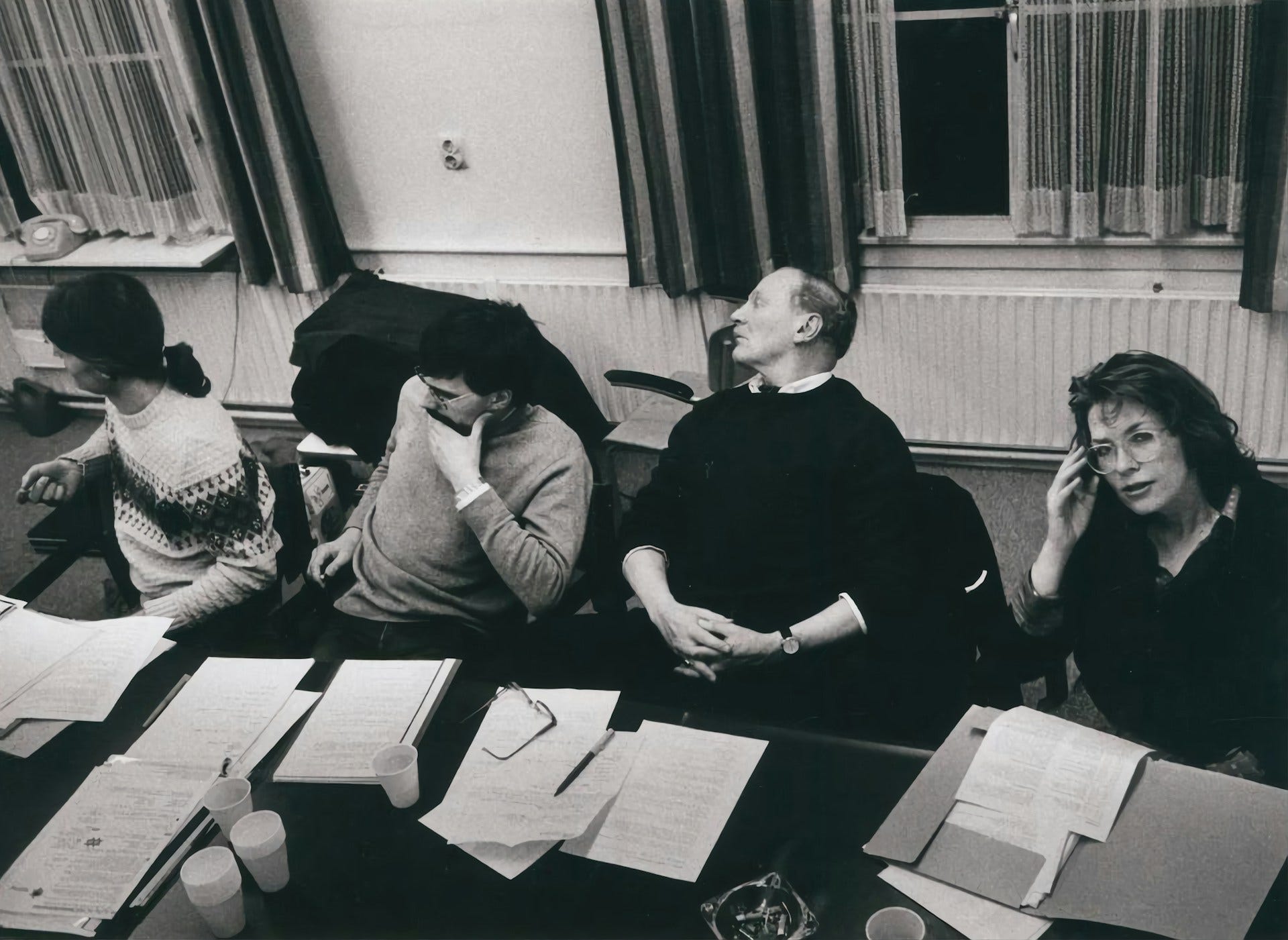
In a recent conversation with David Dietz, Director of Impact for NEXUS Global, we observed a paradoxical dynamic: many purpose-driven networks exist to bring people together to collaborate. Yet, in our experience, getting people to collaborate isn’t straightforward. We especially marveled at the challenges of “working groups”, when members form a sub-group to work on a new project together.
At some point, in a network’s evolution, the urge arises to not simply talk about the shared purpose, but to do something about it. This especially tends to arise at big gatherings. Conversations reveal untapped opportunities for impact, people get excited and someone suggests to form a working group or a project team.
In theory, these working groups are perfectly set-up to drive collective action: they have a clear purpose, shared context and they often bring together a diverse group of people with relevant expertise. What more can you ask for?
While I see many powerful collaborations emerge in networks, almost none of them come from working groups (or similar structures). In my experience, very few working groups actually get things done. Some drive short-term projects. But surprisingly few shared projects sustain impact over time. (I’m talking particularly about new & shared projects in a network, not collaborations of members on existing projects).
So why is that? Here are 3 potential reasons:
Change-makers have extremely full plates
In many impact networks, people join working groups with genuine interest to contribute, but little bandwidth to get things done. This is especially true in networks where members are in some form of leadership position or have their own project or venture. They have a clear mission: to advance their organization or project. Given their leadership positions, they have little capacity to take on significant additional roles. At the same time they believe in the bigger mission and see the opportunity to be involved with related initiatives. That’s how they meet relevant peers, that’s how they identify emerging trends.
So when a working group forms around a shared project in the energy transition space, and I have my own project in that space, I’ll be curious to see where it goes. I’m happy to contribute in a light-touch way. But ultimately, my priority will be to advance my own project.
Collective action needs pro-active leadership
In my experience, working groups fail when there aren’t one or two people who feel called (and empowered!) to lead.
There’s much talk about the power of decentralization these days—a growing assumption that if you simply bring the right people together, great things will emerge. But my experience shows that collective action rarely arise spontaneously from newly formed groups. It requires proactive leadership. Sure, decentralization can happen over time, but who helps build a decentralization practice? Who coordinates next steps? Who helps the collective understand roles? Who follows up and commits to follow-through?
The leadership question loops back to point 1: Assuming each project is a universe unto itself, with infinite potential tasks, who will have the energy, interest and bandwidth to proactively drive a newly formed project forward?
Most networks are not set-up to manage collective impact projects
When members don’t step up to lead, the network organizer often becomes the de facto project manager. This can create an unhealthy dynamic. Members shift from co-creators who organize themselves to passive participants / consumers, waiting to be organized. All of a sudden, the network manager’s role becomes about chasing people for their deliverables.
Most networks also vastly underestimate how much time collective projects demand. They might treat working groups as side projects that emerge from annual summits. But driving real action requires significant energy, focus, and resources. A central organizer pulling together diverse stakeholders to drive a project forward can work. Project Together in Germany is a great example: they mobilize diverse change-makers around a shared goal. But the crucial difference is that they don’t run purpose-driven campaigns as side projects—it’s their main gig. That requires dedicated staff and resources.
Collective action, of course, does happen
Here are some instances that seem to have a higher chance of success:
When the working group has one or two people who take on pro-active leadership roles. Often they happen to be in a moment of transition and have bandwidth to make this not just another project, but to make it their main project. Or they are resourced from their own organization to take on the leadership role as part of their day job, not as a volunteer gig on the side.
When the working group decides to help the existing project of one member. Then that member becomes the de-facto leader and the rest become supporters and advisors.
I have seen groups successfully deliver inward looking projects, meaning projects that benefit the network: for example members co-organize a global summit, develop a new governance policy, co-write a book about the network. But outward looking projects, that would benefit the wider ecosystem, come through very rarely.
What do you think of this? When does collective action actually happen in networks? And what conditions are necessary? I’d love to read your comments!
Thanks for reading & till next time - Fab
About Entangled
// Entangled: Welcome to Entangled, exploring the people, insights and practices that help communities & networks thrive. If you care about bringing people together, this might be for you.
// Hello, I’m Fabian, co-founder of the Together Institute where we work with purpose-driven communities, networks and their leaders to help them thrive.
// Thank you to David Dietz for the lovely conversation and inspiration.
What an interesting context and story from your experience about group dynamics. When someone identifies the need for a community and the first wave of advocates for it, you might think "This will work." What I find especially powerful is that the ones with the vision, the energy, and the resources to set everyone else on fire are also the most over-committed people already. It's not that they do not have the skills and discipline to "do the work" instead, they are bound by the same circumstance of everyone: Only 24 hours in this day, if you get to live it all out.
I've observed a very similar dynamic in my community. We've tried multiple working groups over the years and only very few materialize into tangible outcomes. The ones that do often have a very clear outcome to start with. They are more like "project groups" instead of working groups.